Skip to content
No results
  • English
  • Japanese
  • Traditional Chinese
  • Essays
  • Metta & Karuna
  • About
  • Browse All Tags
Lucid
  • About
  • Browse All Tags
Lucid
  • Metta & Karuna

Metta Guide 28. Sympathetic Joy — The Circuit That Was Always Available
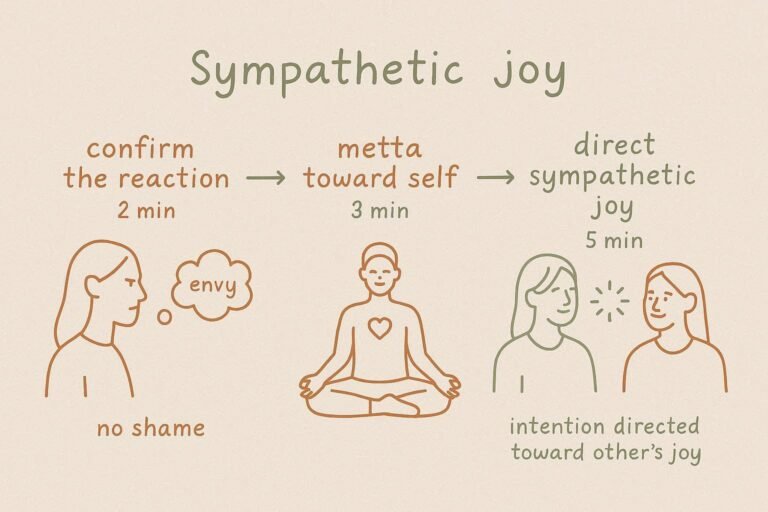
Introduction: When Someone Else’s Good News Lands Somewhere Complicated A friend gets the promotion. Someone achieves what they had been working toward. A post appears on a screen showing someone’s happiness. Good for them, the thought begins. And underneath it,…
  • Dhamma Pala
  • 04/30/2026
  • Metta & Karuna

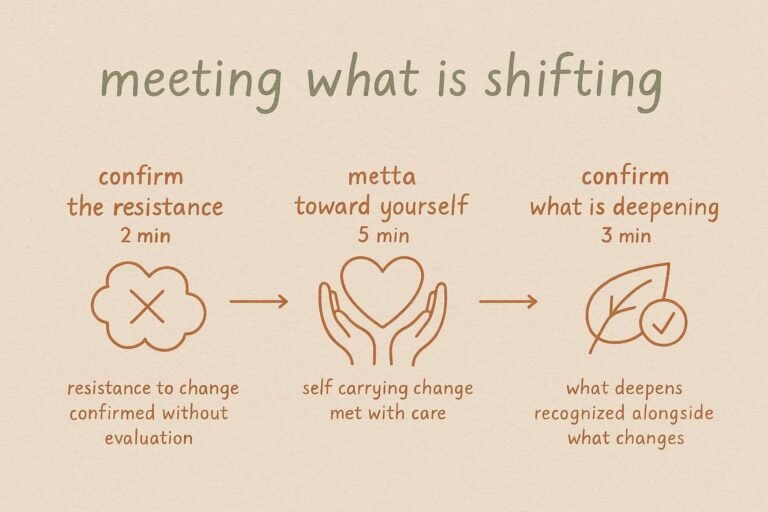
Metta Guide 27. Aging and Compassion — Understanding the Resistance, Seeing What Deepens

Introduction: Why “Just Accept It” Doesn’t Work Noticing the change in the mirror. Movement that is slower than it used to be. Memory with a different texture than before. I should accept this. And yet the acceptance doesn’t come. The…

  • Dhamma Pala
  • 04/30/2026
  • Metta & Karuna

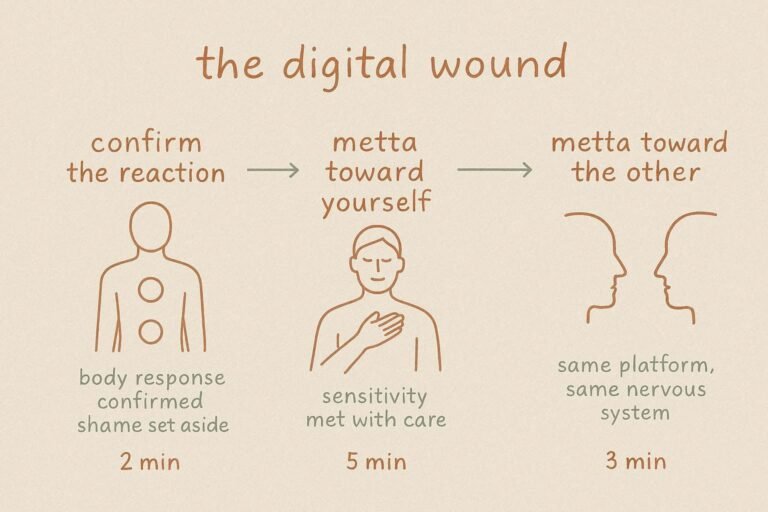
Metta Guide 26. The Digital Wound — What the Platform Designed and the Nervous System Received

Introduction: Why “It’s Just the Internet” Doesn’t Work A message left on read. A critical comment. A number that went down. A post that landed in silence. I shouldn’t let this affect me this much. And yet it does. That…

  • Dhamma Pala
  • 04/30/2026
  • Metta & Karuna

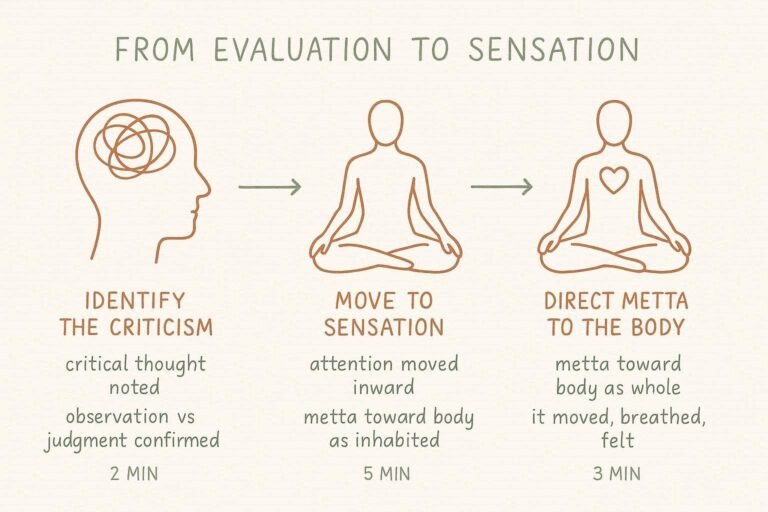
Metta Guide 25. The Critical Eye Turned Inward — Where It Comes From and Where It Lands

Introduction: The Criticism Arrives Before the Looking Is Done Standing in front of a mirror. Catching a photograph. A glance down at a hand, a stomach, a face. What arrives is not observation. It is judgment. Too much. Too old.…

  • Dhamma Pala
  • 04/30/2026
  • Metta & Karuna

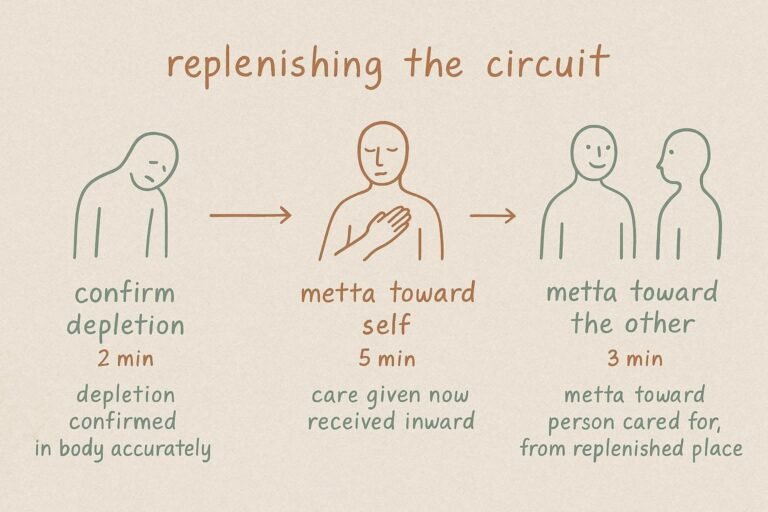
Metta Guide 24. When the Carer Needs Care — The Source That Runs Dry Eventually Stops Resembling Care

Introduction: Caring Continuously and Losing Yourself Are Not the Same Thing Keeping going for someone who matters. Still moving even when exhausted, because right now they come first. That dedication is real. But care coming from a depleted source gradually…

  • Dhamma Pala
  • 04/30/2026
  • Metta & Karuna

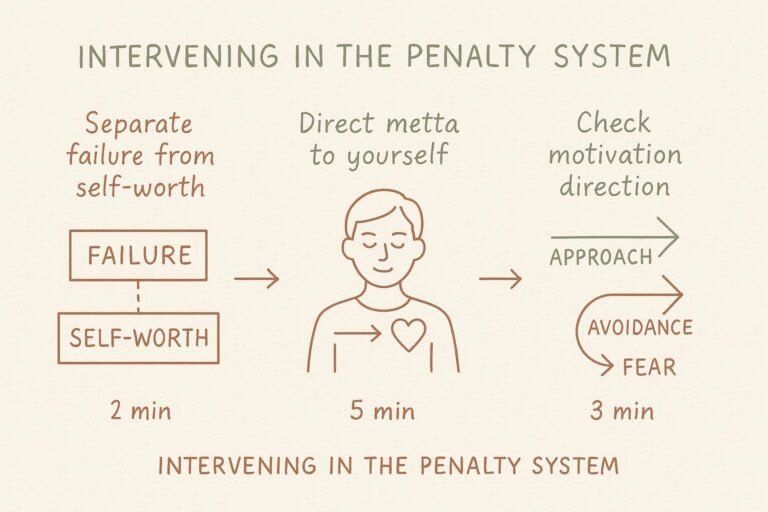
Metta Guide 23. The Penalty Structure of Perfectionism — Why “I Could Have Done Better” Won’t Stop

Introduction: The Standard Was Never the Problem After a mistake, the replay begins. That decision was wrong. I could have done more. Why didn’t I handle it differently. Holding high standards is not the problem. The problem is what happens…

  • Dhamma Pala
  • 04/30/2026
  • Metta & Karuna

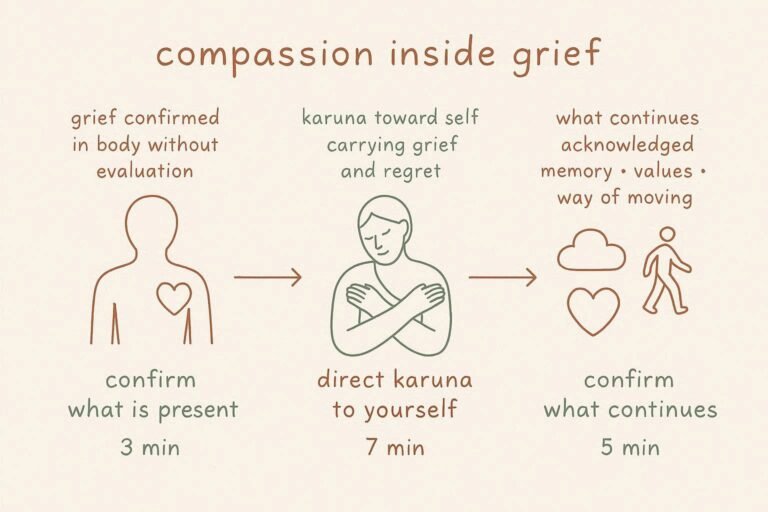
Metta Guide 22. Grief Does Not End — Why That Is Evidence of the Attachment

Introduction: Criticizing Yourself for Still Being in It After losing someone, or something that mattered — the grief doesn’t go away. It returns in unexpected moments. I should be past this by now. Why didn’t I do more when I…

  • Dhamma Pala
  • 04/30/2026
  • Metta & Karuna

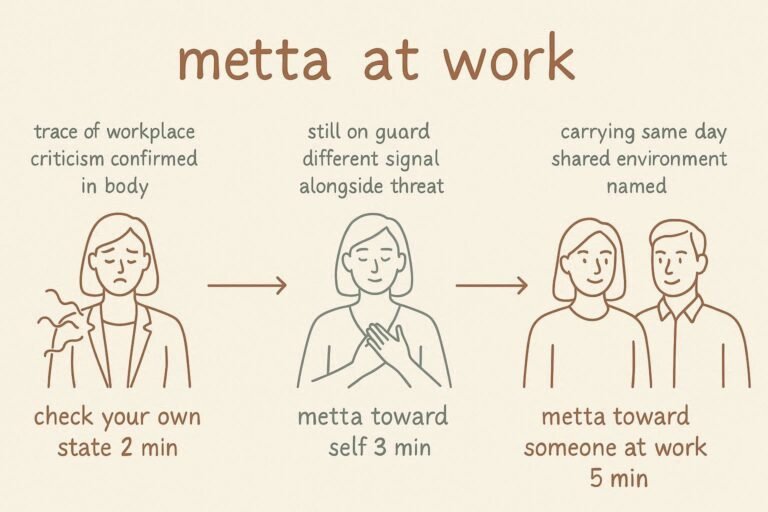
Metta Guide 21. Nobody Was Underperforming — The Environment Was Using Their Capacity for Something Else

Introduction: When Capable People Produce Ordinary Results The meeting has ended. The capable person in the room said almost nothing, and nobody asked why. A capable team member isn’t contributing in meetings. New ideas aren’t coming. Mistakes are reported late,…

  • Dhamma Pala
  • 04/30/2026
  • Metta & Karuna

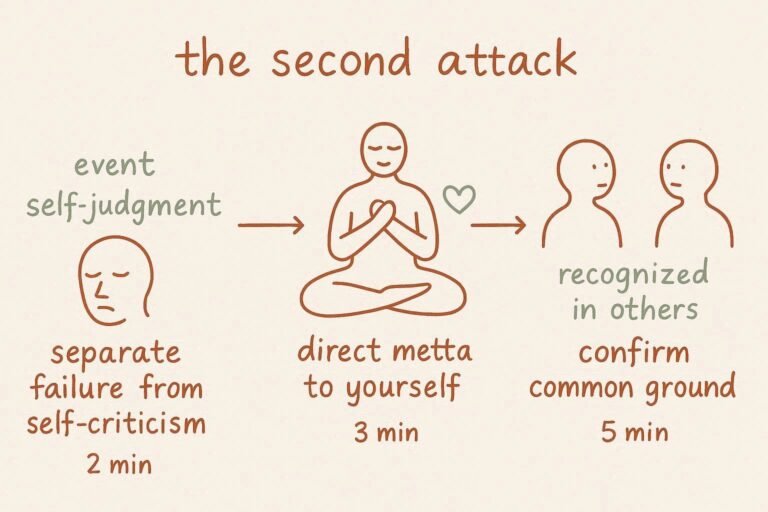
Metta Guide 20. Recovery Is Not Blocked by the Failure — The Structure of Self-Criticism as a Second Attack

Introduction: Why “Be Stronger” Makes It Worse After a failure, we are hurt twice. The first time by the failure itself. The second time by the voice that asks why it happened, what it says about us, whether it will…

  • Dhamma Pala
  • 04/30/2026
  • Metta & Karuna

Metta Guide 19. The Structure of Sleepless Nights — Trying to Sleep While the Threat System Is Still Running

Introduction: This Is Not a Willpower Problem Lying in bed, the thinking won’t stop. Today’s failure. Tomorrow’s uncertainty. What should have been said. What shouldn’t have been said. Deciding to stop thinking doesn’t stop the thinking. This is not a…

  • Dhamma Pala
  • 04/30/2026
  • Metta & Karuna

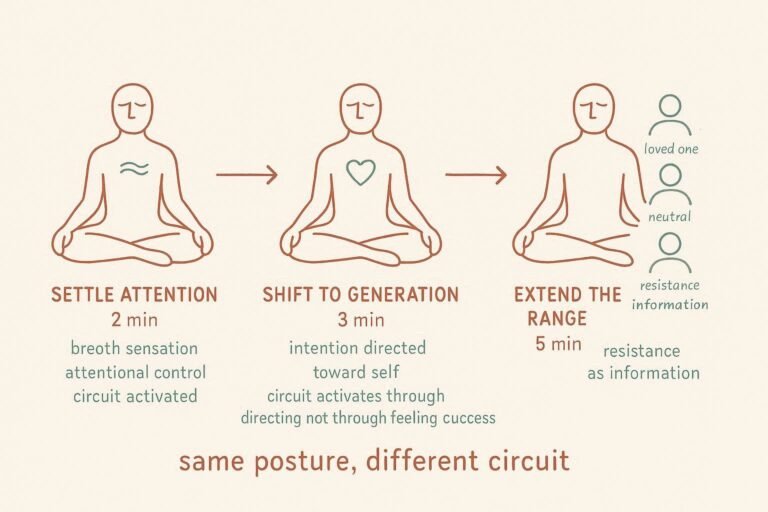
Metta Guide 18. Why Mettā Is Not Mindfulness — Training a Different Circuit

Introduction: There Are Places Stillness Alone Cannot Reach You have probably noticed it, even if you didn’t have a name for it. Mindfulness asks you to observe. Mettā asks you to produce something. The instructions look similar. The posture is…

  • Dhamma Pala
  • 04/30/2026
  • Metta & Karuna

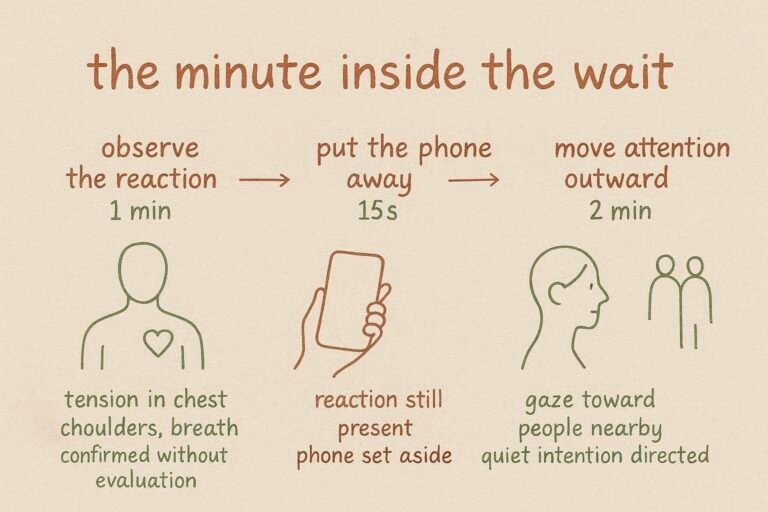
Metta Guide 17. The Structure of Waiting — Understanding the Irritation Opens a Different Use of the Time

Introduction: The Irritation Is an Automatic Response to Being Stopped The line at the register isn’t moving. The train isn’t coming. The elevator number isn’t changing. The irritation that arrives in that moment is not a character flaw or a…

  • Dhamma Pala
  • 04/30/2026
  • Metta & Karuna

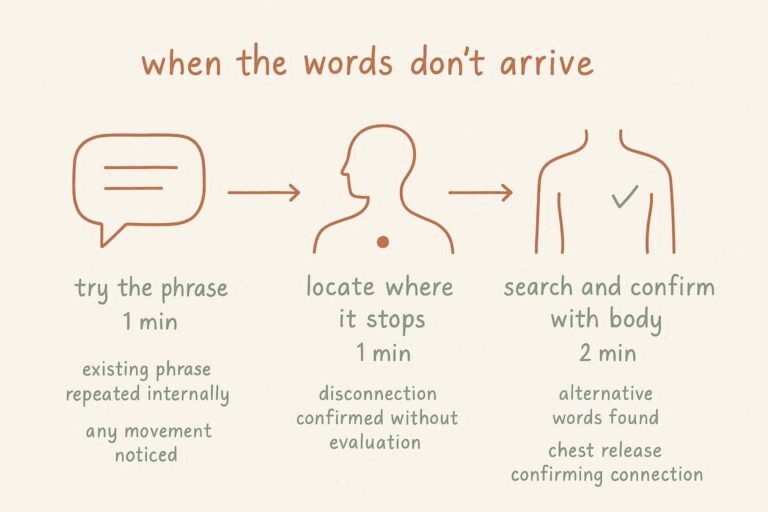
Metta Guide 16. Finding Your Own Words — What Is Happening When a Phrase Doesn’t Land

Introduction: “It Doesn’t Feel Right” Is Where to Begin May I be happy. Something about it feels distant. A faint awkwardness. The words and the self on the receiving end of them separated by a thin layer of something. This…

  • Dhamma Pala
  • 04/30/2026
  • Metta & Karuna

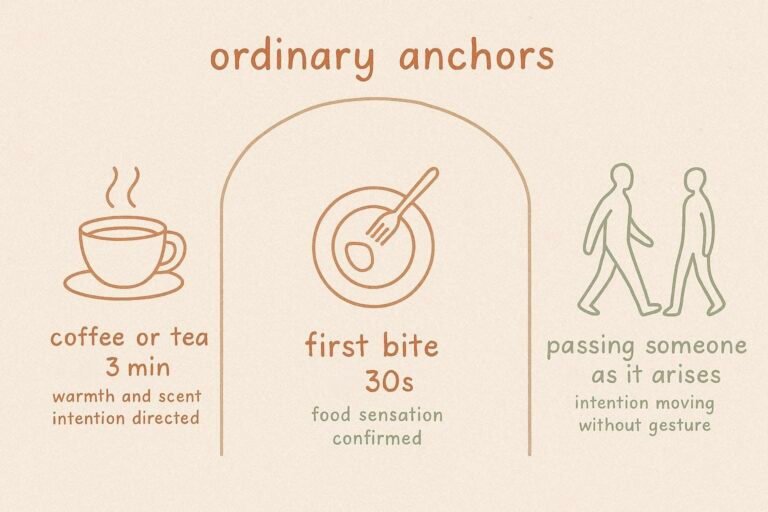
Metta Guide 15. Compassion While Doing Something Else — Attaching Intention to What Already Exists

Introduction: “While Doing Something Else” Is Not the Compromise Version The sense that there is no time to meditate tends to arise when practice is designed around dedicated time. But compassion practice does not require a quiet room or a…

  • Dhamma Pala
  • 04/30/2026
  • Metta & Karuna

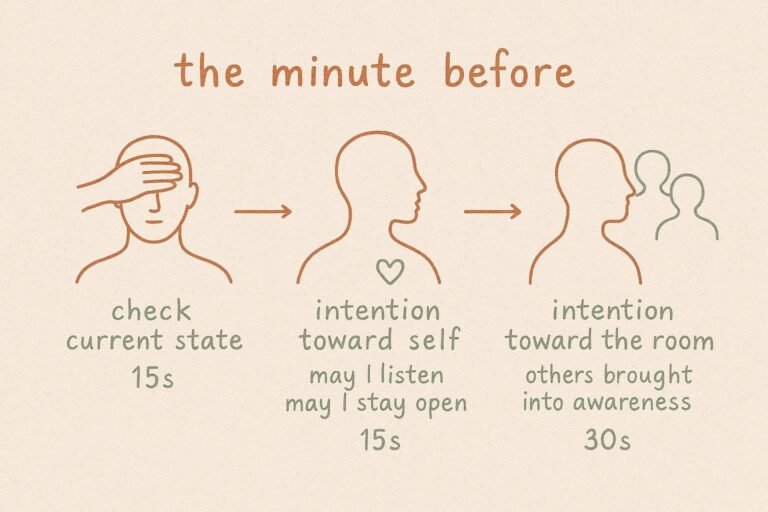
Metta Guide 14. Before the Meeting Starts — What One Minute of Intention Actually Changes

Introduction: Something Is Already Underway Before the Meeting Begins Before the meeting starts — walking down the corridor, taking a seat — something is already in motion. The residue of the previous meeting. Irritation at an unresolved email. The memory…

  • Dhamma Pala
  • 04/30/2026
  • Metta & Karuna

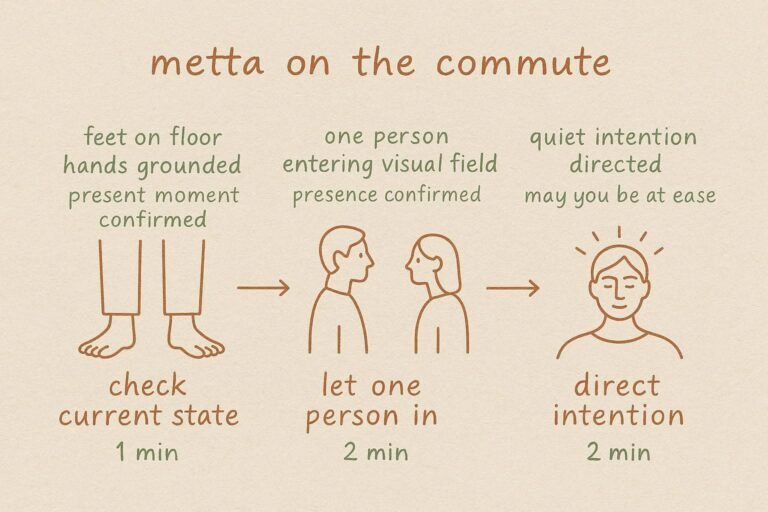
Metta Guide 13. Silent Mettā on the Commute — Directing Intention Where the Heart Has Closed

Introduction: Everyone Is Actively Not Looking On a crowded train, the passengers don’t look at each other. They look at phones, at windows, at nothing in particular. This is not rudeness. It is an adaptation — something urban life develops…

  • Dhamma Pala
  • 04/30/2026
  • Metta & Karuna

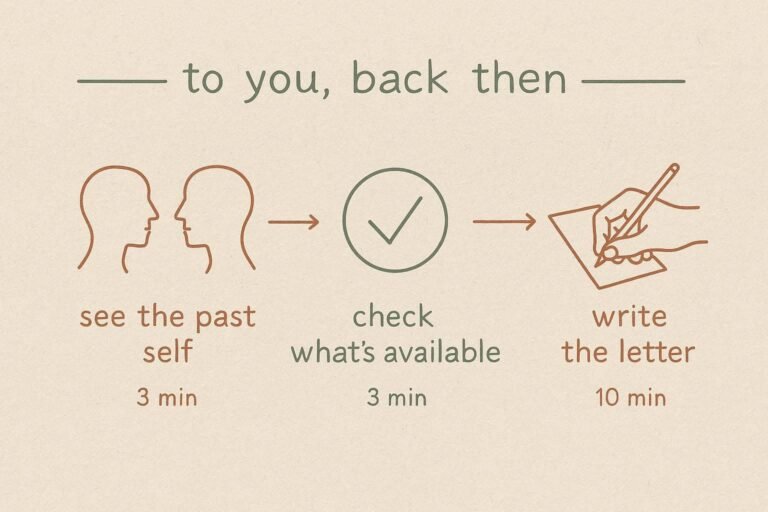
Metta Guide 12. A Letter to Who You Were — The Distance That Makes the Words Possible

Introduction: Not Knowing What to Say to That Person A moment from the past returns without warning. A failure. A loss. The particular loneliness of a place you once were. You tell yourself it’s over. The emotion disagrees. When you…

  • Dhamma Pala
  • 04/30/2026
  • Metta & Karuna

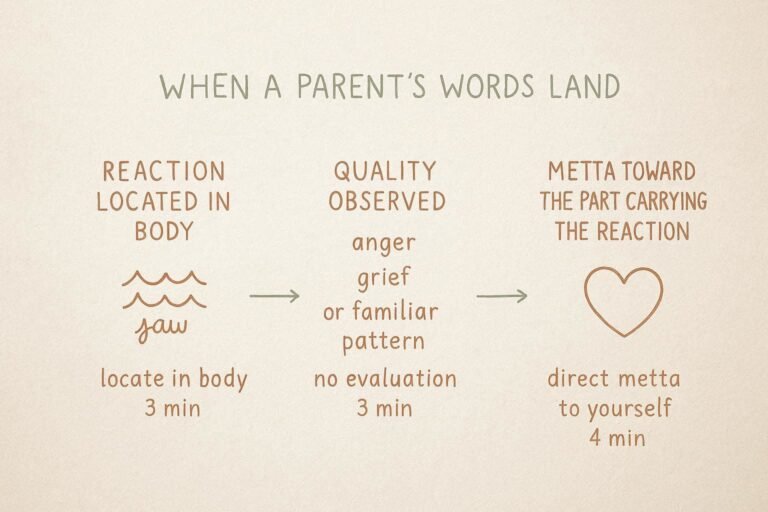
Metta Guide 11. When a Parent’s Words Land Hard — What the Reaction Is Telling You

Introduction: There Are Two Reasons It Lands This Way “When are you getting married?” “Is that job really going to work out?” “You need to get it together.” A friend could say the same words and it wouldn’t stay with…

  • Dhamma Pala
  • 04/30/2026
  • Metta & Karuna

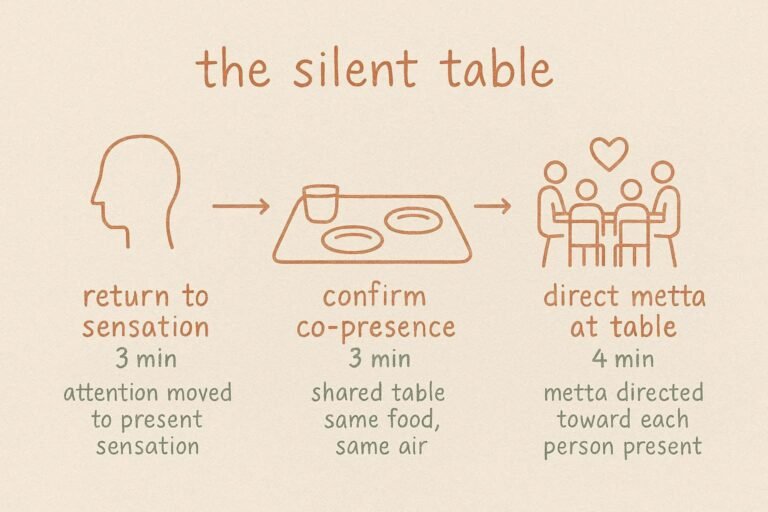
Metta Guide 10. Silence at the Table: When Connection Is Running on Older Channels

Introduction: Silence Is Not a Failure of Connection You’re at the table with family. No conversation. Just the quiet weight of people eating. The discomfort arrives: I should say something. Why don’t we ever talk? Then comes the interpretation: the…

  • Dhamma Pala
  • 04/30/2026
  • Metta & Karuna

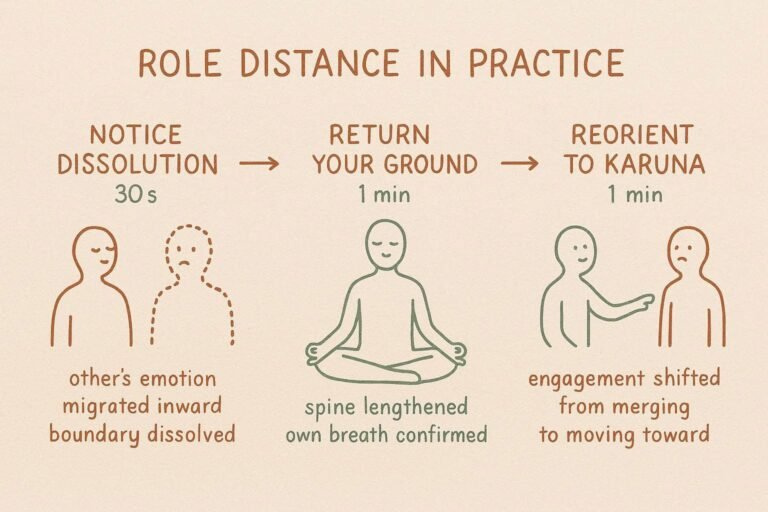
Metta Guide 9. The Structure of Empathy Fatigue: What Happens When the Role Boundary Dissolves

Introduction: The Exhaustion Isn’t From Feeling Too Much After listening to someone’s pain, you’re drained. After a difficult conversation, their anxiety is still with you hours later. Every time you hold space for someone in pain, something in you diminishes…

  • Dhamma Pala
  • 04/30/2026
1 2 3 4 … 11
Next

© 2026 Lucid. All rights reserved.